



How to Read an Immigration Delay Timeline from GCMS Notes
How to Read an Immigration Delay Timeline from GCMS Notes
For many applicants, GCMS notes look technical, fragmented, and difficult to use. But when they are read properly, they can be turned into a working timeline that tells a much clearer story about a delayed permanent residence file.
That timeline does not just show what happened. It also helps reveal what did not happen, when the file appears to have gone quiet, and which internal steps were completed long ago while one or two stages remained unresolved. In delay analysis, those silences often matter as much as the milestones.
A practical GCMS timeline therefore does two things at once: it organizes the file into understandable stages, and it helps show whether the overall processing history looks active, stagnant, or somewhere in between.
Why build a timeline at all?
A delayed immigration file is rarely explained by one GCMS line in isolation. Most entries make sense only when placed in sequence. A timeline helps turn scattered notations into a process map.
That process map is useful for both applicants and referral partners. It shows what stage the file reached, what was passed, what remains pending, and whether there are long gaps between meaningful events. In a permanent residence file, that can be especially important because several major stages may already be complete even though the file remains open.
In other words, the goal is not just to know whether a note exists. The goal is to understand where that note sits in the life of the application.
Start with the intake stage
The first stage of a usable GCMS timeline is file intake and creation. This usually includes the application received date, the lock-in date if shown, the date the file was formally created in the system, and any later program-coding or office-assignment entries.
These entries matter because they establish the baseline. They show when the file entered IRCC’s system and which offices appear to have handled it. In some cases, office transfers or later program entries can help explain procedural movement. In other cases, they may show that much time passed before substantive work really began.
Add biometrics and identity milestones
The next useful set of entries concerns biometrics and identity-related processing. A GCMS timeline should capture when biometrics were enrolled, whether they were later updated, and whether the result was marked as received.
This stage often helps explain how the file became ready for criminality and related admissibility review. It may also show that the applicant had already satisfied an important identity step long before the file became delayed at a later phase.
That distinction matters because once biometrics and identity steps are complete, later delay usually requires another explanation.
Map criminality, info-sharing, and eligibility carefully
A strong GCMS timeline should then identify when criminality started and when it passed, if those dates appear. It should also capture information-sharing entries, including when that process started and when it was completed.
Eligibility is another core milestone. If GCMS notes show that eligibility passed and even include an officer notation confirming no concerns, that is often a very important development. It means the file has already crossed one of the central substantive thresholds of the permanent residence process.
When criminality, info-sharing, and eligibility are all complete, the timeline begins to tell a much sharper story. It shows that the file is not generally unreviewed. It is delayed despite major progress.
Record medical milestones separately
Medical entries deserve their own place in the timeline. A working GCMS timeline should note when medicals were passed, when they expire, and whether renewed or extended medical validity appears later in the file.
This is more than administrative detail. Expired medicals often become one of the visible consequences of long delay. If the notes show that medicals were passed well after intake but still risk expiring before finalization, that can help illustrate how delay creates rolling prejudice and repeated administrative burden.
Track security references, but do not stop there
Security-related entries are often where delayed files become most difficult to interpret. A useful timeline should record when security was created, when a security screening was submitted if that appears, and whether the status remains in progress.
But a proper timeline does not stop at writing down the security label. The key question is what happened after security appears to have started. Did the file continue to move? Did later officer entries appear? Did the notes show any meaningful development? Or did the record largely go quiet?
That is where the timeline becomes more than a list. It becomes an analytical tool.
Why later officer activity matters
Later officer activity is often one of the most revealing parts of the timeline. Even a single later update date can help show whether the file remained actively reviewed or simply lingered in the system.
A timeline should therefore include later status notes, later review dates, renewed requests, or the last visible update in the record. These later entries help answer an important question: was there meaningful activity throughout the delay period, or only isolated touches separated by long silence?
That difference can matter greatly in assessing whether the file looks genuinely complex or merely stalled.
Why gaps and silences matter as much as milestones
One of the biggest mistakes people make when reading GCMS notes is focusing only on positive entries. Passed. Completed. Updated. Reviewed. Those entries matter, but so do the spaces between them.
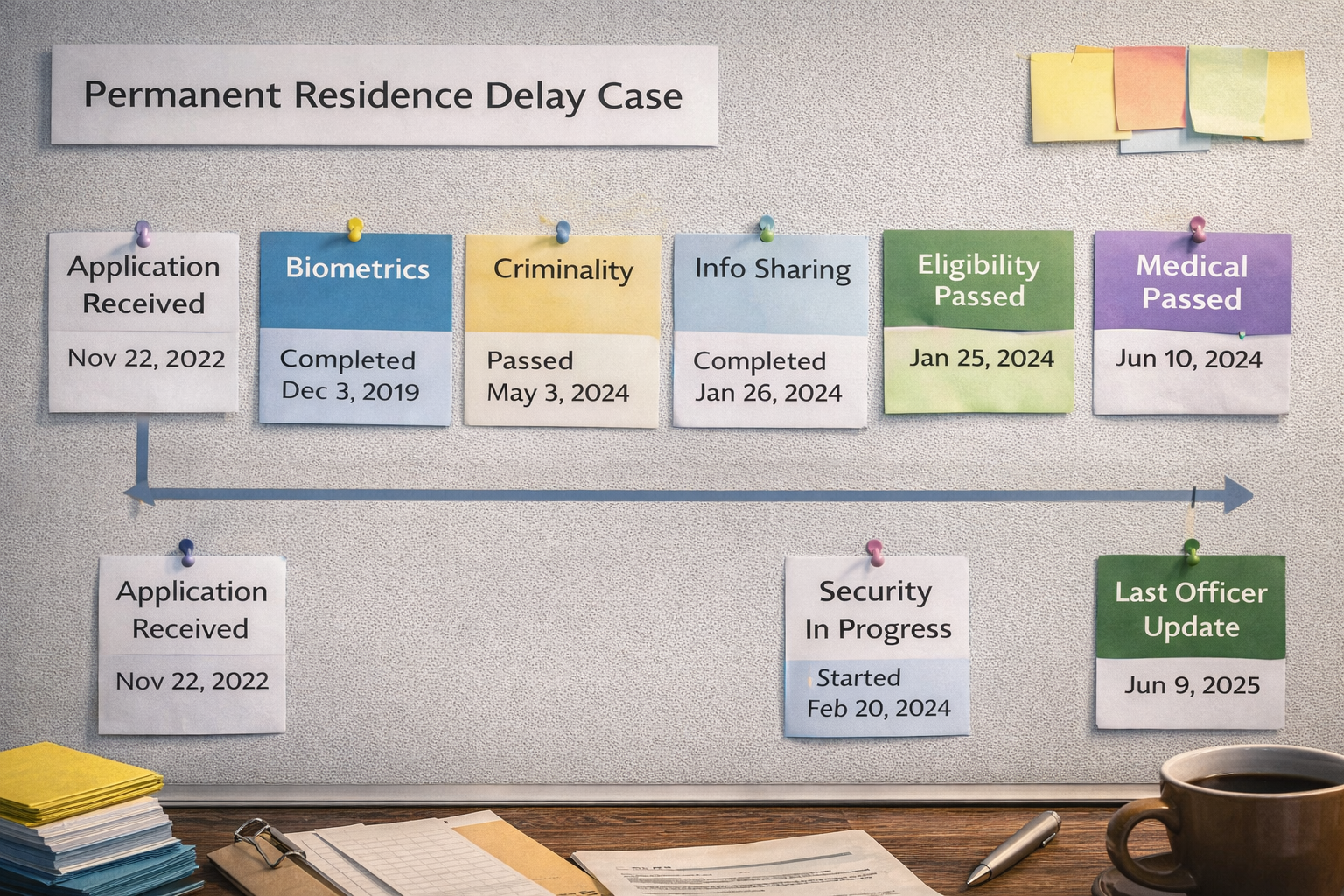
If a timeline shows that eligibility passed, information sharing completed, and criminality passed, but security remained in progress with little visible development afterward, the silence itself becomes meaningful. It may suggest that the file is substantially advanced but stuck at one unresolved stage.
In delay analysis, long quiet periods can be just as important as formal milestones because they help show whether the process looked active or dormant over time.
How to turn the timeline into a practical conclusion
Once the timeline is built, the final step is to write a short conclusion in plain language. That conclusion should answer three questions.
First, what major stages are complete? Second, what stage appears to remain open? Third, does the timeline look like steady progress, sporadic activity, or prolonged stagnation?
A strong conclusion might say, for example, that the permanent residence file appears substantially advanced because eligibility, criminality, medicals, and information sharing are complete, while security remains in progress. That kind of summary helps applicants and referral partners understand both where the file stands and why the delay may deserve closer legal attention.
Final takeaway
Reading GCMS notes becomes much easier when the file is turned into a timeline. Start with intake, then layer in biometrics, criminality, information sharing, eligibility, medicals, security references, and later officer activity.
Most importantly, pay attention not only to the milestones, but also to the gaps. In a delayed permanent residence file, silence between entries can be one of the clearest indicators that the process has slowed more than it should.
Frequently Asked Questions
What is the first date I should put on a GCMS timeline?
Usually the application received date. That establishes the starting point of the file and helps frame everything that follows.
Should I put security screening on the timeline even if I do not fully understand it?
Yes. It is important to record when security appears to have been created or submitted, but you should also track what happened after that point rather than treating the label as a complete explanation.
Why do gaps in the timeline matter?
Because long periods with little meaningful activity may help show that the file was stagnant, even if several major stages had already been completed.
Can a GCMS timeline help determine whether a delay case is strong?
Yes. A clear timeline often makes it easier to see whether the file progressed normally, whether one stage became a bottleneck, and whether the overall delay may deserve closer legal review.
If your permanent residence file has been delayed and you want a structured review of the GCMS timeline, email us at [email protected].
Legal Information Disclaimer
The information provided here is for general informational purposes only and should not be considered legal advice. The content on this site is not intended to create, nor does it constitute a lawyer-client relationship. It's important to consult with a qualified attorney for advice on your specific legal issues.
No responsibility is assumed for any reliance on the information contained herein, and Canadian Future disclaims all liability with respect to such information. This site may not reflect the most current legal developments; therefore, the information here should not be used as a substitute for legal advice from a licensed professional attorney in your jurisdiction.
Leave a comment