Assessing complexity in a delayed Canadian immigration file

What Makes a Delay Case Look ‘Complex’ — and What Does Not

IRCC often suggests that a delayed file is 'complex,' but that label does not explain itself. This article separates true complexity from generic indicators that are often overstated in litigation. It explains why references to security screening, business activity, travel history, foreign employment, or cross-border elements do not automatically justify long delay without file-specific evidence showing what is actually unusual about the case.

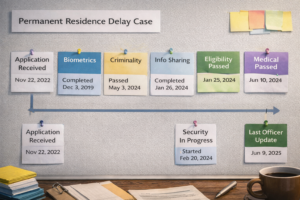
Immigration delay timeline built from GCMS notes in a permanent residence file

How to Read an Immigration Delay Timeline from GCMS Notes

Summary GCMS notes can be turned into a working timeline that helps applicants and practitioners understand where a permanent residence file has moved, where it has stalled, and which stages remain open. This article explains how to map the most important entries, including submission, biometrics, criminality, info-sharing, eligibility, medicals, security references, and later officer activity. It also explains why gaps and silences in the timeline often matter just as much as the visible milestones.

Pending info from partners note in an immigration delay case

Does a ‘Pending Info from Partners’ Note Automatically Defeat Mandamus?

A note saying that a file is ‘pending info from partners’ is relevant, but it is not always determinative. This article explains why that wording does not automatically defeat mandamus, especially where the record shows that the note appeared long ago, little else happened afterward, or the government cannot provide real evidence about what the partner-related step actually involves. Timing, context, and file-specific activity still matter.

Security screening delays in a Canadian immigration file

Security Screening Delays: When IRCC’s Explanation Starts to Weaken

IRCC often explains delay by saying that security screening is pending or that information is being awaited from partners. Sometimes that explanation is legitimate. But it does not automatically end the legal analysis. This article explains why a generic reference to security screening may start to weaken where the record shows little movement, vague GCMS notes, no clear case-specific concern, or long periods of inactivity after screening appears to have started.

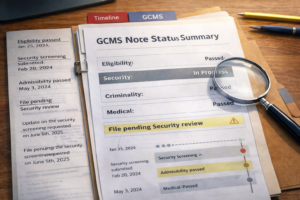
GCMS notes in a delayed Canadian immigration file

What GCMS Notes Can Reveal About a Delayed Immigration File

GCMS notes are not a magic answer, but they are often one of the best diagnostic tools in a delayed immigration file. They can help show whether eligibility was reviewed, whether security screening is still pending, whether medicals expired, whether the file was transferred, or whether long periods passed with little meaningful activity. This article explains how to read GCMS notes carefully and why they matter to both applicants and referral partners trying to understand where a file may be stuck.

Mandamus record for IRCC delay case

How Lawyers Build a Strong Mandamus Record Against IRCC Delays

A strong mandamus case is not built on frustration alone. It is built on evidence. This article explains how lawyers assemble a persuasive record against IRCC delays by mapping the full timeline, reviewing GCMS notes, documenting unanswered follow-ups, showing prejudice, and framing the relief carefully. The goal is to present a case that is methodical, credible, and grounded in the actual processing history rather than in general complaints about delay

Mandamus and delayed Canadian immigration processing

Can Mandamus Force IRCC to Finish Processing Before Final Approval Is Available?

Mandamus does not always have to result in immediate final approval to be useful. In some immigration streams, final issuance may be constrained by quotas, inventory pressures, or queue-based processing. Even so, a mandamus strategy may still push IRCC to complete key internal steps such as eligibility, admissibility, or security-related processing. This article explains why advancing the file can still create a major strategic advantage, even where final approval cannot yet be forced.